



How to Manage International Repatriation (2026 Guide)

September 2, 2026

Share this article

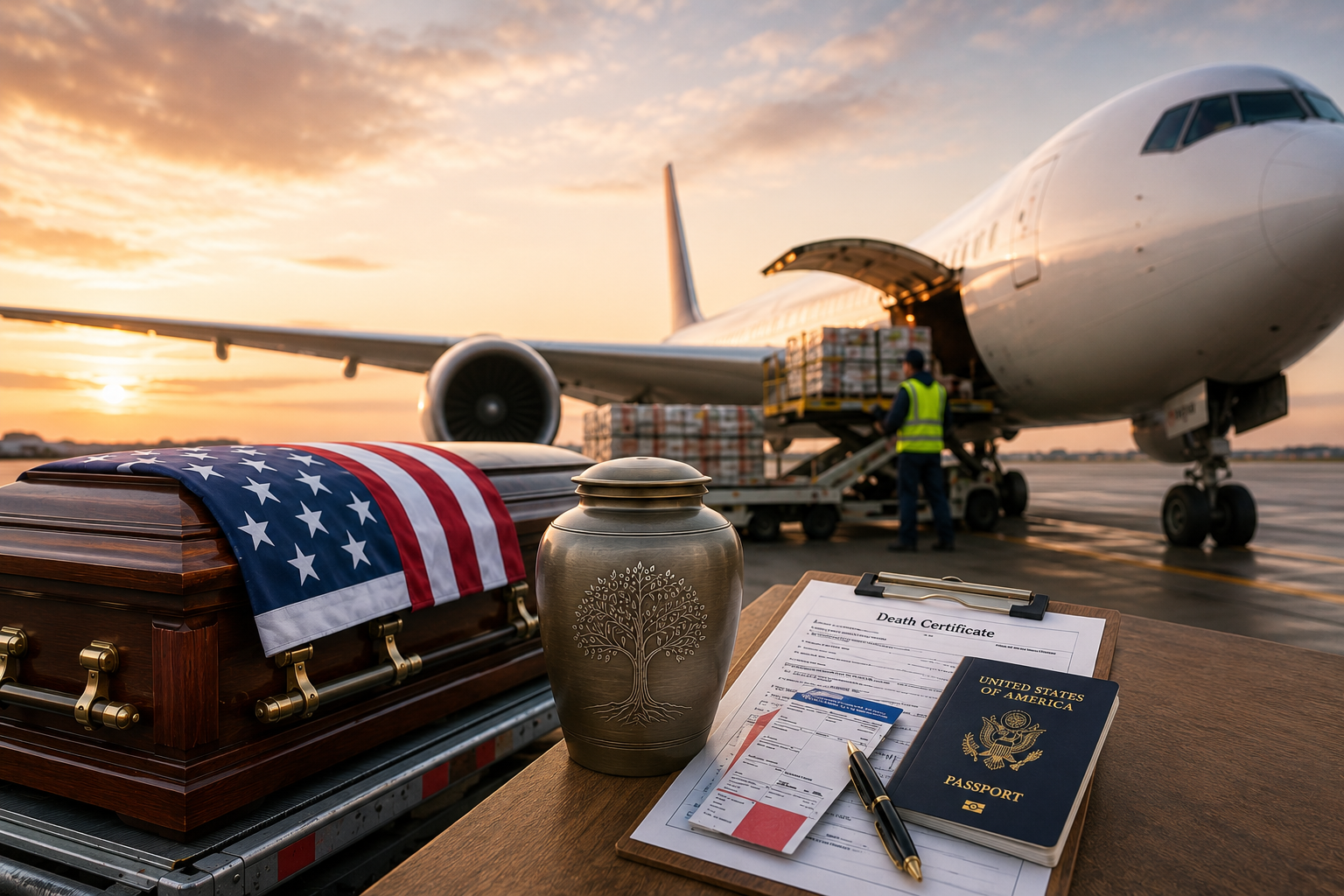
International repatriation of human remains is the specialized process of transporting a deceased person across international borders for final disposition. It requires precise coordination between funeral directors, airlines, and government consulates to ensure all legal, health, and logistical regulations are met for a dignified and timely return home.

How does the international funeral shipping process work?

The process of international funeral shipping is a multi-layered logistical challenge that begins the moment a death occurs abroad or when a family requests a body be sent to their home country. Because every nation has unique laws regarding the handling of human remains, there is no single universal protocol. Instead, the process follows a structured sequence managed by specialized professionals who understand the intersection of international law, aviation regulations, and mortuary science.

First, the deceased is taken into the care of a licensed funeral director in the country where the death occurred. This professional acts as the primary coordinator for the initial stages, which include local registration of the death and necessary hygienic treatments. Embalming is almost always a requirement for international transit to ensure public health safety and to preserve the body during long-haul flights. Once the body is prepared, it is placed in a specialized shipping container, often a zinc-lined casket or a "Ziegler case," which is then hermetically sealed to prevent leakage or odors during flight.

Simultaneously, the funeral director must liaise with the relevant embassy or consulate. This step is critical because the receiving country must grant permission for the remains to enter its territory. The consulate will review all medical and legal paperwork before issuing a "Consular Mortuary Certificate." This document, alongside the airline’s airway bill, serves as the official passport for the deceased. Finally, the remains are transported to the airport, cleared through customs, and flown to the destination country, where a local funeral home takes over for final burial or cremation services.

Legal Requirements for Repatriating Human Remains

Navigating the legal landscape of repatriation requires an understanding of both the departure and arrival countries' statutes. These regulations are designed to ensure that the transport of human remains does not pose a biohazard and that all civil registration requirements are fulfilled. Failure to adhere to even a minor legal detail can result in significant delays at international borders, causing further distress to grieving families.

Common legal requirements across most jurisdictions include:

  • Verification of Cause of Death: A formal medical certificate must be issued stating the cause of death, ensuring no contagious diseases are present.
  • Coroner’s Out of England/Country Permit: In many jurisdictions, a coroner must provide a formal release for the body to be removed from the country.
  • Notarized Translations: If the departure and destination countries use different languages, all legal documents must be translated by a certified professional.
  • Apostille Certification: Some countries require documents to be apostilled to prove their authenticity for international use.
  • Compliance with IATA Regulations: Airlines follow the International Air Transport Association guidelines for the structural integrity of shipping crates.

Working with a service provider experienced in Consulate & Logistics Services is the most effective way to manage these requirements. They act as the bridge between the grieving family and the bureaucratic hurdles of government offices, ensuring that every permit is signed and every seal is properly applied according to the law of both nations.

What documents are needed for international repatriation?

Documentation is the most time-consuming yet vital component of international funeral shipping . Without the correct paperwork, airlines will refuse to load the remains, and customs officials will deny entry at the destination. The sheer volume of paperwork often surprises families, which is why having a central mortuary coordinator is essential for organization and speed.

Professional interaction

The core document package typically includes the following items:

  1. Certified Copy of the Death Certificate: The official government record of the passing.
  2. Freedom from Infection Certificate: A medical statement confirming the deceased did not have a communicable disease.
  3. Embalming Certificate: A document signed by the mortician confirming the body was prepared for international transit.
  4. Funeral Director’s Declaration: An affidavit stating that only the body and necessary packing materials are in the casket.
  5. Passport of the Deceased: The physical passport must often accompany the shipping documents to be cancelled by the consulate.

In addition to these, specific countries may require a "Certificate of Contents" or a "Consular Sealing Certificate." This is where the consulate physically seals the casket or shipping container with an official stamp or wax seal to ensure it is not tampered with during transit. Because these documents must often be hand-delivered to embassies, the logistics of document courier services are a major part of the overall repatriation timeline.

Mortuary Shipping and Consulate Logistics

Mortuary shipping is not merely about transportation; it is about the specialized care of a human being during a complex journey. This involves the use of "Air Trays" or "Ziegler Cases." An air tray is a reinforced wooden base with a heavy-duty cardboard lid designed to protect a traditional casket during air travel. A Ziegler case, on the other hand, is a lightweight metal container used when a body is shipped without a traditional casket or when specific health regulations require a hermetically sealed metal environment.

Consulate logistics represent the diplomatic side of the process. Every country’s consulate has specific operating hours, holiday schedules, and processing times. Some consulates may take only 24 hours to process a repatriation request, while others may take several days or even weeks if additional investigations into the death are required. Experienced shippers maintain strong relationships with consular staff to expedite these processes whenever possible. They understand which embassies require appointments and which ones accept walk-in filings, which can save precious days in the repatriation timeline.

Furthermore, the logistics extend to the airline choice. Not all airlines are equipped or willing to transport human remains. Those that do have specific "Human Remains" (HUM) desks that handle these sensitive shipments. These desks ensure that the remains are treated with the highest level of respect, typically being the last items loaded onto the aircraft and the first ones offloaded, minimizing time spent in cargo holding areas.

How long does international funeral shipping take?

The timeline for international repatriation of human remains can vary significantly based on the destination and the circumstances of the death. On average, the process takes between 7 and 14 days, though some cases may be resolved faster, and others may take longer. Understanding the factors that influence this timeline can help families manage their expectations and plan local services accordingly.

Several variables affect the speed of the journey:

  • Local Administrative Speed: How quickly the local government issues the initial death certificate.
  • Consular Processing Times: The time the embassy takes to verify documents and issue the mortuary certificate.
  • Flight Availability: The frequency of direct flights between the origin and destination cities.
  • Customs Clearance: The time required for the destination country’s health and customs officials to inspect the paperwork.
  • Holiday and Weekends: Consulates and government offices often close for both local and international holidays, which can pause the process.
Global logistics

During this time, the deceased remains in a climate-controlled mortuary facility. While the wait can be difficult for families, it is necessary to ensure that every legal requirement is met so that the final journey is uninterrupted. Once the flight is booked, the family is provided with an Air Waybill number, allowing for real-time tracking of the remains as they move through international airspace.

Key Factors Influencing Repatriation Costs

Repatriation is often a significant financial undertaking. The costs are divided into three main categories: professional fees, transportation fees, and third-party disbursements. Professional fees include the services of the funeral director, embalming, and the specialized shipping container. Transportation fees are determined by the airline, usually based on the combined weight of the remains and the casket, as well as the distance traveled.

Third-party disbursements involve fees paid to external entities, such as:

  1. Embassy/Consulate Fees: Charges for processing documents and sealing the casket.
  2. Local Government Fees: Costs for death certificates and transit permits.
  3. Translation Fees: For translating legal documents into the destination language.
  4. Airlines Cargo Rates: Which fluctuate based on fuel surcharges and seasonal demand.
  5. Destination Funeral Home Fees: For receiving the remains and coordinating the final service.

To manage these costs, families should look for transparent pricing and consider Funeral Pre-planning Services . Pre-planning allows individuals to set aside funds and specify their wishes, potentially including travel insurance that covers repatriation costs. Without such insurance, the burden falls on the next of kin, making it vital to work with a provider who can offer a comprehensive quote that covers all aspects of the journey from start to finish.

How to choose a funeral shipping service in New Jersey?

Choosing the right provider is the most critical decision a family can make during this time. For those in the tri-state area, selecting a firm that specializes in International Funeral Shipping New Jersey ensures that you are working with experts who are familiar with the major international hubs like Newark Liberty International and JFK. A local expert understands the specific requirements of the many diverse consulates located in and around New York City and New Jersey.

You should look for a provider that offers:

  • 24/7 Availability: Death does not follow a schedule, and international time zones require around-the-clock communication.
  • Global Network: A provider with established contacts in the destination country to ensure a smooth hand-off.
  • Transparent Communication: Regular updates on document status and flight details.
  • Specialized Equipment: Access to high-quality Caskets & Urns that meet international shipping standards.
  • Compassionate Care: A team that understands the cultural and emotional sensitivity of the situation.

By choosing a dedicated specialist, you transfer the burden of logistics to professionals, allowing your family to focus on grieving and honoring your loved one. Whether you are shipping remains to Europe, Asia, Africa, or South America, the right partner will treat the deceased with the utmost dignity and ensure they are returned to their homeland without unnecessary delay.

Summary of International Repatriation Steps

International repatriation of human remains is a complex but manageable process when handled by experienced professionals. It involves securing legal permits, preparing the body for long-distance travel, and navigating the diplomatic requirements of consulates. While the costs and timelines can vary based on the destination, the core goal remains the same: a dignified return for the deceased and peace of mind for the family.

Key Takeaways:

  • Expertise is essential: Do not attempt to manage international shipping without a licensed mortuary shipper.
  • Documentation is the foundation: Ensure all death certificates and consular permits are perfectly aligned.
  • Plan for 7–14 days: Allow time for bureaucratic processing and flight logistics.
  • Communication matters: Work with a provider like those offering Domestic Funeral Shipping New Jersey who can handle both local and global needs.

If you are currently facing the need for repatriation, your next step should be to Contact a specialized funeral shipping service to begin the documentation process immediately. Early intervention is the best way to ensure a smooth and respectful journey home for your loved one.

Recent Posts

Cost planning for international funeral shipping
October 1, 2026
Find out the total cost to ship a body to another country, including airline fees, containers, and documentation for international repatriation.

Professional funeral transportation logistics and planning.
September 16, 2026
Understand costs for transporting a dead body between states. Contact us for compassionate funeral services & mortuary shipping options.

International funeral shipping logistics and legal documentation guide.
August 4, 2026
Learn the legal requirements, logistics, and documentation needed for international funeral shipping. A comprehensive guide for families and funeral directors navigating repatriation.

International funeral shipping documentation and embassy seal concept
August 1, 2026
Learn the essential embassy requirements & documentation needed for international funeral repatriation & mortuary shipping to ensure a smooth transition.

A professional funeral director providing compassionate guidance on shipping services.
July 15, 2026
Navigate the complexities of funeral shipping and international repatriation with our expert guide. Learn about costs, legal requirements, and logistics.

Professional funeral transport vehicle parked outside a modern facility.
July 1, 2026
Learn how to navigate the legal and logistical requirements for shipping human remains from every U.S. state with our comprehensive professional guide.

Global map representing international funeral shipping services.
June 27, 2026
Learn the complex process of shipping human remains to every country, including repatriation logistics, documentation, and consulate requirements for 2026.

Paperwork on a wooden table with a gold pen resting on a cream folder beside a printed document.
May 10, 2026
The essential legal documents, consulate permits, and 'Mortuary Passports' required for international funeral shipping and repatriation from New Jersey.
Flag-draped casket and urn beside a passport on airport tarmac near a jet at sunset
May 10, 2026
Discover the total international funeral shipping cost, including airfare, consulate fees, and repatriation services. Learn what's included in the price.