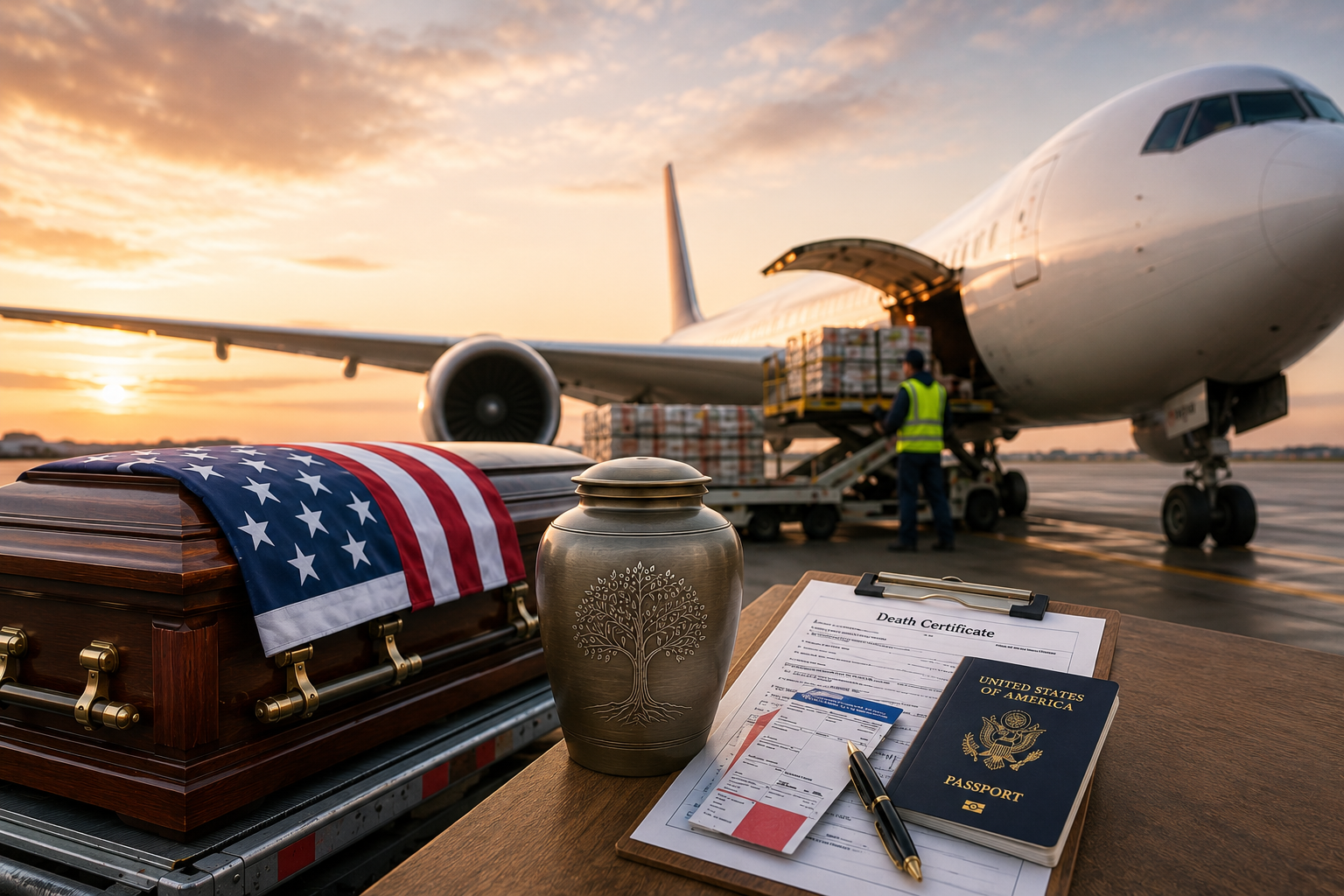



How to Ship Human Remains to Every Country (2026 Guide)
Shipping human remains to every country involves navigating complex international regulations, securing consulate approvals, and managing specialized transportation logistics. Repatriation requires a licensed funeral director to coordinate health certificates, transit permits, and airline-approved caskets to ensure a dignified journey back to the deceased’s home country while maintaining strict legal compliance.
How does shipping human remains to every country work?
The process of international funeral shipping is a highly regulated logistics operation that begins the moment a family decides to return their loved one to their country of origin. Because every nation has its own set of public health laws and border entry requirements, there is no "one-size-fits-all" approach. The journey typically starts with the local funeral home in New Jersey or the place of death, which must act as the primary coordinator between the family, the local government, the destination country’s consulate, and the airline.
First, the remains must be prepared according to both domestic laws and the specific requirements of the receiving nation. This almost always includes embalming or, in some cases, specific preservation methods required for long-haul air travel. Once the body is prepared, the funeral director secures a "Burial Transit Permit" and a certified death certificate. These documents serve as the foundation for all subsequent international clearances. The coordination of these moving parts is why professional services are essential; a single missing document can lead to delays at the border or refusal of entry by the destination country.
Logistics also involve the "Known Shipper" status. In the United States, the Transportation Security Administration (TSA) requires that human remains only be shipped by entities that are registered as known shippers. This is a security measure that ensures the integrity of the cargo. A specialized mortuary shipping company handles these details, booking the flight as a priority cargo shipment. Throughout this process, the focus remains on dignity and speed, ensuring the deceased is treated with the utmost respect while navigating the bureaucratic hurdles of global travel.
Essential Documentation for Global Body Transportation
To successfully ship remains across international borders, a specific set of documents must be assembled and often translated into the official language of the destination country. This paperwork acts as a passport for the deceased, proving that the remains pose no health risk and that all legal requirements for death registration have been met. The complexity of this paperwork cannot be overstated, as it often requires multiple levels of government certification.
Key documents required for shipping human remains to every country include:
- Original Certified Death Certificate (often with a raised seal).
- Non-Contagious Disease Letter from the local Health Department.
- Embalmer’s Affidavit confirming the body was prepared for international transit.
- Burial Transit Permit issued by the local registrar.
- Consular Mortuary Certificate and transit permit from the destination embassy.
In many instances, the destination country requires an "Apostille" on the death certificate. An Apostille is a form of international legalization that verifies the authenticity of a government official's signature. This is common for countries that are members of the Hague Convention. For countries that are not, the documents may need to be "legalized" by the Department of State and the destination country's consulate. Navigating these consulate & logistics services is a core component of professional repatriation, ensuring that every stamp and signature is perfectly aligned before the flight departs.
Why is consulate approval necessary for repatriation?
Consulate approval is the most critical step in shipping human remains to every country because it serves as the official permission from the receiving nation to allow the body to enter its territory. Each consulate or embassy has its own set of rules, which can change without notice based on public health trends or diplomatic shifts. The consulate’s role is to verify that the documentation provided by the U.S. funeral home meets their specific national standards and that the body is being shipped in a manner that respects their laws.
When a funeral director contacts a consulate, they are essentially applying for a "Mortuary Passport." The consulate will review the cause of death—certain contagious diseases may result in an immediate denial of entry or require special sealing of the casket. They also check that the casket or shipping container meets their national requirements. Some countries, for example, require a specific thickness of lead or zinc lining to prevent any leakage or environmental hazards during the flight. Without the official consulate seal on the shipping documents and the physical container, the airline will not accept the shipment, and the receiving country’s customs officials will not allow the remains to clear the airport.
Specialized Containers and Airline Requirements
Shipping human remains internationally is not a standard cargo operation. It requires specialized equipment designed for durability and containment. The industry standard for international shipping is the "Ziegler Case." This is a hermetically sealed metal liner that fits inside a traditional wooden casket or a heavy-duty cardboard shipping container known as an "Air Tray." The purpose of the Ziegler case is to create an airtight and watertight seal, which is a requirement for almost all international airlines to prevent any potential health risks or damage to other cargo.
In addition to the internal liner, the outer container must be robust enough to withstand the rigors of air travel. For families who have already purchased a casket from our caskets & urns collection, the casket is placed inside an Air Tray, which features a wooden base and a reinforced cardboard top to protect the finish of the wood. If the family chooses to have the body cremated first, the process is simpler but still requires specific urns & memorables that are X-rayable for security screening. Airlines treat these shipments with the highest priority, typically loading them last and unloading them first to minimize the time the remains spend on the tarmac.
What factors influence the cost of international shipping?
The cost of shipping human remains to every country is variable and depends on a wide range of factors. Unlike domestic services, international repatriation involves multiple third-party fees and logistical expenses that can add up quickly. Families should be prepared for a transparent breakdown of these costs to avoid surprises during a difficult time. The total price is generally a combination of professional service fees, transportation costs, and government-mandated charges.
Factors that most significantly impact the total cost include:
- Airfare rates, which are calculated based on the combined weight of the remains and the container.
- Distance to the destination country and the availability of direct flights.
- Consulate and embassy fees for document legalization and transit permits.
- The type of shipping container (e.g., standard air tray vs. specialized zinc-lined casket).
- Translation fees for official documents and death certificates.
It is important to note that airfare for human remains is significantly higher than standard passenger tickets or general cargo. This is because the shipment is treated as a priority, and the airline must follow specific handling protocols. Additionally, the weight of a high-quality casket and the required outer shipping container can exceed 400 pounds, which contributes to the freight cost. Working with a provider that offers funeral pre-planning services can sometimes help families understand these potential costs in advance, allowing for better financial preparation.
What are the common challenges in global remains transport?
Even with meticulous planning, shipping human remains to every country can present unique challenges. One of the most common issues is the variation in local government operating hours and religious holidays in the destination country. If a death occurs on a Friday and the destination consulate is closed for a national holiday, the entire process can be delayed by several days. Furthermore, unexpected flight cancellations or mechanical issues can disrupt the sensitive timeline of a funeral service planned abroad.
Another challenge is the linguistic and bureaucratic barrier. Some countries have extremely specific requirements regarding the wording on a death certificate. If the cause of death is listed in a way that is not recognized by the receiving country, the consulate may demand a revised certificate, which requires going back to the local medical examiner. This is why having an experienced team that understands the nuances of global repatriation is vital. They can anticipate these hurdles and ensure that all paperwork is flawless before it reaches the consulate’s desk.
Selecting a Trusted Repatriation Specialist
When a loved one passes away far from home, the responsibility of bringing them back can feel overwhelming. Choosing the right partner for shipping human remains to every country is a decision that impacts the dignity of the deceased and the peace of mind of the family. A trusted specialist should not only have the technical expertise to handle the logistics but also the compassion to support the family through the emotional weight of the process. Look for a provider with a proven track record in international mortuary shipping and a deep understanding of NJ state laws and global embassy requirements.
At our firm, we pride ourselves on being a bridge between families and the global community. We handle every detail, from the initial removal to the final delivery at the destination airport, ensuring that your loved one is never alone. Our about page highlights our commitment to excellence in this niche field. Whether you are dealing with a sudden loss or looking to understand your options, we are here to provide the guidance and expertise necessary to navigate the world's borders.
Summary of Global Shipping Takeaways
Shipping human remains to every country is a multi-step journey that requires expert intervention to ensure success. By understanding the core requirements, families can better navigate the process during a time of grief.
- Expert Coordination: A licensed funeral director is required to handle the "Known Shipper" status and airline bookings.
- Document Precision: All paperwork must be certified, often apostilled, and translated for the destination country.
- Consulate Role: The embassy of the receiving country must grant a mortuary permit before the remains can depart.
- Specialized Packaging: Hermetically sealed liners and reinforced air trays are mandatory for international air travel.
- Next Steps: Contact a specialist to begin the documentation process immediately, as international transit can take 5 to 10 business days.
For more information or to begin the process, please visit our contact page to speak with a repatriation specialist today.