
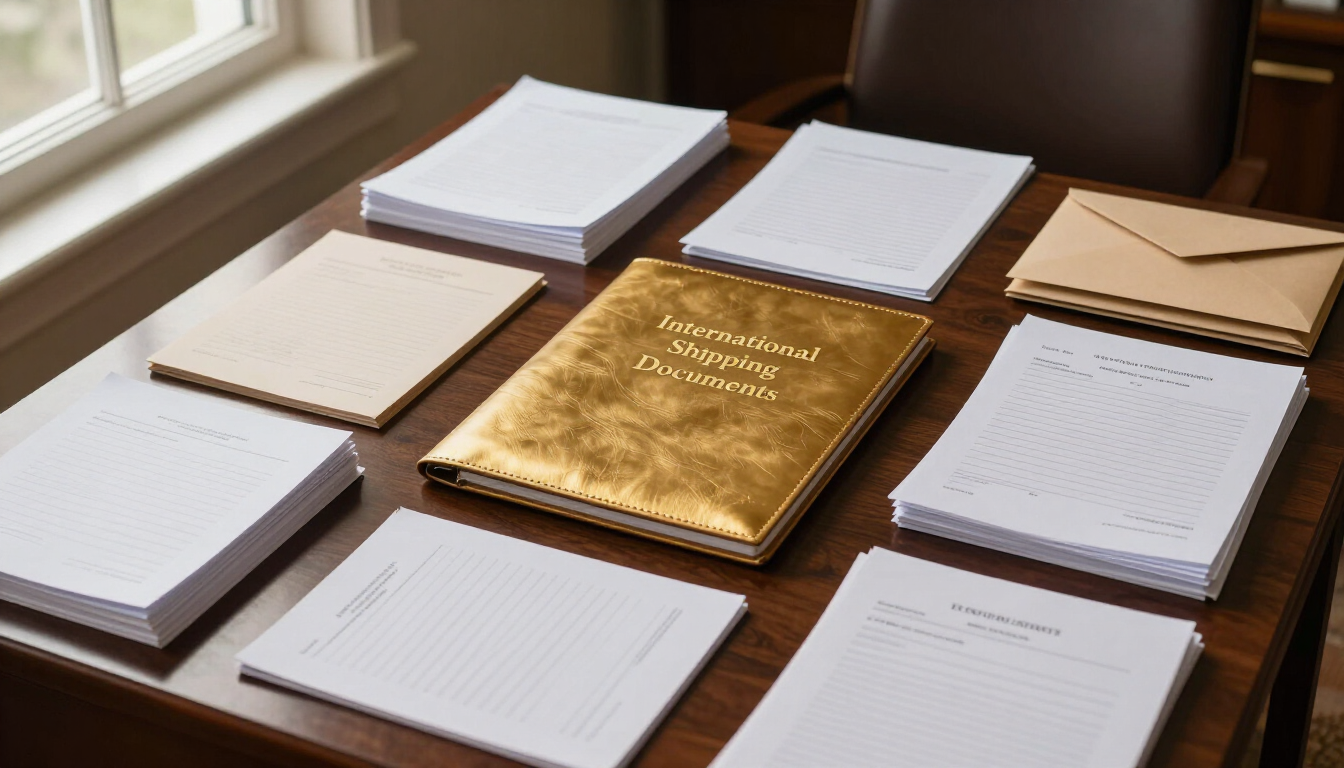


Embassy Requirements for International Funeral Repatriation

August 1, 2026

Share this article

International funeral repatriation requirements involve a complex set of legal and health-related mandates dictated by the receiving country’s embassy or consulate. Essential documents typically include a certified death certificate, an embalming affidavit, a non-contagious disease certificate, and a transit permit from local health authorities.

What are the core documents required for international funeral repatriation?

Navigating the legal landscape of international funeral repatriation begins with the meticulous collection of vital records. Every sovereign nation has the right to set its own standards for entry, and when it comes to human remains, these standards are rigorous to protect public health and ensure legal accountability. While requirements vary, a standard set of documents serves as the foundation for most international funeral shipping processes.

The most critical document is the Certified Death Certificate . This must be an original copy issued by the state where the passing occurred. In many instances, the embassy will require a "long-form" certificate that clearly states the cause of death. This is vital because many countries have specific restrictions regarding deaths caused by infectious diseases.

Following the death certificate, the Embalming Affidavit is almost universally required. This document, signed by a licensed funeral director and often notarized, confirms that the body has been prepared according to international sanitary standards. It often includes details about the chemicals used and the method of preparation to ensure the remains are preserved for a long-haul journey.

Other common requirements include:

  • Non-Contagious Disease Letter : Issued by a health officer or the medical examiner.
  • Burial Transit Permit : Legal permission to move the deceased across state or national borders.
  • Passport of the Deceased : Used to verify citizenship and provide a destination for the remains.
  • Consular Mortuary Certificate : A document issued by the consulate itself after they have reviewed all other paperwork.

Understanding the role of the Apostille and legalizations

When documents move from one country to another, their authenticity must be verified through a process known as legalization or an Apostille. If the destination country is a member of the Hague Convention, an Apostille—a specialized certificate issued by the Secretary of State—is usually sufficient. This simplifies the process by providing a globally recognized stamp of authenticity on the death certificate and other legal papers.

However, for countries not party to the Hague Convention, a multi-step legalization process is required. This often involves sending documents to the U.S. Department of State in Washington, D.C., and then to the embassy of the destination country. This is a core part of our consulate logistics services , as a single error in this chain can result in significant delays at the border or the airport.

Professional Document Preparation

How do embassy requirements differ by world region?

Embassy requirements are not a "one size fits all" scenario. They are deeply influenced by the destination country's religious traditions, legal system, and public health policies. Understanding these regional nuances is the key to a successful repatriation.

Requirements for Latin America and the Caribbean

Many countries in Central and South America, as well as the Caribbean, require all documents to be translated into Spanish or Portuguese by a certified translator. Furthermore, some consulates in this region require the physical presence of a funeral director at the consulate to hand-deliver the paperwork and receive the consular seal. It is also common for these countries to mandate a specific type of metal-lined casket or a "Ziegler case" to meet hermetic sealing standards.

Regulations across Europe

European nations often have very high standards for the sanitation and sealing of the shipping container. For example, many European Union countries require a zinc-lined coffin that is soldered shut to ensure a completely airtight seal. While the paperwork is often more streamlined if the documents are in English (or translated into the local language), the physical requirements for the caskets and urns are among the strictest in the world.

Standards in Asia and the Middle East

Repatriation to Asia often involves coordination with multiple ministries of health. In many Middle Eastern countries, where Islamic traditions favor rapid burial, the consulate logistics are often prioritized for speed. However, the documentation must still be flawless. Some countries in this region may also require a certificate from the funeral home stating that no jewelry or contraband is being shipped with the deceased.

Technical specifications for international shipping containers

Shipping human remains by air requires specialized equipment designed to withstand changes in pressure and temperature while remaining completely secure. These are not standard caskets but rather engineered transport solutions.

  1. Air Trays : Used when the deceased is already inside a casket. The tray has a wood base and a heavy cardboard cover to protect the casket from damage during flight.
  2. Ziegler Cases : A gasketed, zinc-lined container that can be placed inside a traditional casket or used as a standalone shipping container. It is the gold standard for hermetic sealing.
  3. Combination Units (Combo Packs) : Used when no casket is being shipped. These consist of a wood-bottomed tray with a padded interior and a corrugated outer shell.
  4. Hermetic Sealing : Many embassies require that the container be soldered or sealed with a permanent gasket to prevent any leakage or gas escape.
  5. Outer Crating : Some countries require a secondary wooden crate around the shipping container for added security and to hide the nature of the cargo from public view.

What is the typical timeline for consulate logistics?

The timeframe for international funeral repatriation is rarely fixed. While a domestic transfer might take a day or two, international shipping typically takes anywhere from 5 to 14 business days. This delay is usually not due to the flight itself, but rather the administrative requirements of the various government agencies involved.

The process begins with the local medical examiner or doctor signing the death certificate, which can take 24–72 hours. Once the certificate is in hand, it must be taken to the local health department for transit permits. If an Apostille or Department of State authentication is needed, you must account for mail time or the processing time of state offices. Finally, the embassy may take 2 to 5 days to review the file before issuing the Consular Mortuary Certificate.

Logistics and Air Transport

Essential steps for coordinating with international airlines

Once the embassy gives the green light, the logistical challenge shifts to the airlines. Human remains are transported as "known shipper" cargo, and airlines have very specific protocols for their handling. We work closely with major carriers to ensure that the remains are treated with the utmost dignity throughout the transit.

Key airline coordination steps include:

  • Booking the Flight : Finding a route with the fewest connections to minimize handling.
  • AWB (Air Waybill) Generation : The legal contract between the shipper and the airline.
  • Tarmac Supervision : Ensuring the container is loaded into a temperature-controlled cargo hold.
  • Consignee Verification : Confirming who will receive the remains at the destination airport (usually a local funeral home).

How can families prepare for the costs of repatriation?

International repatriation is a significant financial undertaking. Families should be prepared for costs that fall into three main categories: funeral home professional services, third-party cash advances (embassy fees, airline freight), and merchandise (shipping containers). Embassy fees alone can range from $50 to over $1,000 depending on the country and the number of documents requiring legalization.

Airline freight is calculated based on the weight and volume of the shipment. Because a casketed shipment is quite heavy, this often represents the largest portion of the cost. To help manage these expenses, some families opt for traditional funeral services and cremation before shipping, as transporting an urn is significantly less expensive and requires far less paperwork than shipping a body.

The importance of professional mortuary shipping services

Attempting to handle international repatriation without professional help is nearly impossible due to the "known shipper" regulations and the specific legal requirements of foreign consulates. A specialized shipping service acts as a liaison between the family, the local authorities, the embassy, and the airline.

Our team understands the specific nuances of each consulate. We know which embassies require appointments, which ones accept digital submissions, and which ones mandate specific types of solder for the casket. By handling these details, we allow the family to focus on their grief and their loved ones rather than bureaucracy.

Summary: Navigating embassy requirements with confidence

Successfully managing international funeral repatriation requires a deep understanding of embassy requirements, precise documentation, and specialized logistics. From securing the initial death certificate to obtaining the final consular seal, every step must be executed with absolute accuracy to avoid delays or legal complications. Families must navigate regional differences, technical shipping standards, and varying timelines across different continents.

Key Takeaways for Families:

  • Start Early : Begin the paperwork process immediately, as embassy approvals can take several days.
  • Verify Merchandise : Ensure the shipping container meets the specific hermetic sealing standards of the destination country.
  • Hire Specialists : Use a funeral director experienced in consulate logistics .
  • Consider Cremation : If the budget is a concern, shipping cremated remains is a simpler and more affordable alternative.
  • Check Translation Needs : Many consulates require all documents to be translated into their official language.

If you are facing the challenge of sending a loved one home, please contact us for compassionate and professional guidance through every step of the international shipping process.

Recent Posts

A professional funeral director providing compassionate guidance on shipping services.
July 15, 2026
Navigate the complexities of funeral shipping and international repatriation with our expert guide. Learn about costs, legal requirements, and logistics.

Professional funeral transport vehicle parked outside a modern facility.
July 1, 2026
Learn how to navigate the legal and logistical requirements for shipping human remains from every U.S. state with our comprehensive professional guide.

Global map representing international funeral shipping services.
June 27, 2026
Learn the complex process of shipping human remains to every country, including repatriation logistics, documentation, and consulate requirements for 2026.

Legal documents for international repatriation on a professional desk.
May 10, 2026
Learn about the essential legal documents, consulate permits, and 'Mortuary Passports' required for international funeral shipping and repatriation from New Jersey.
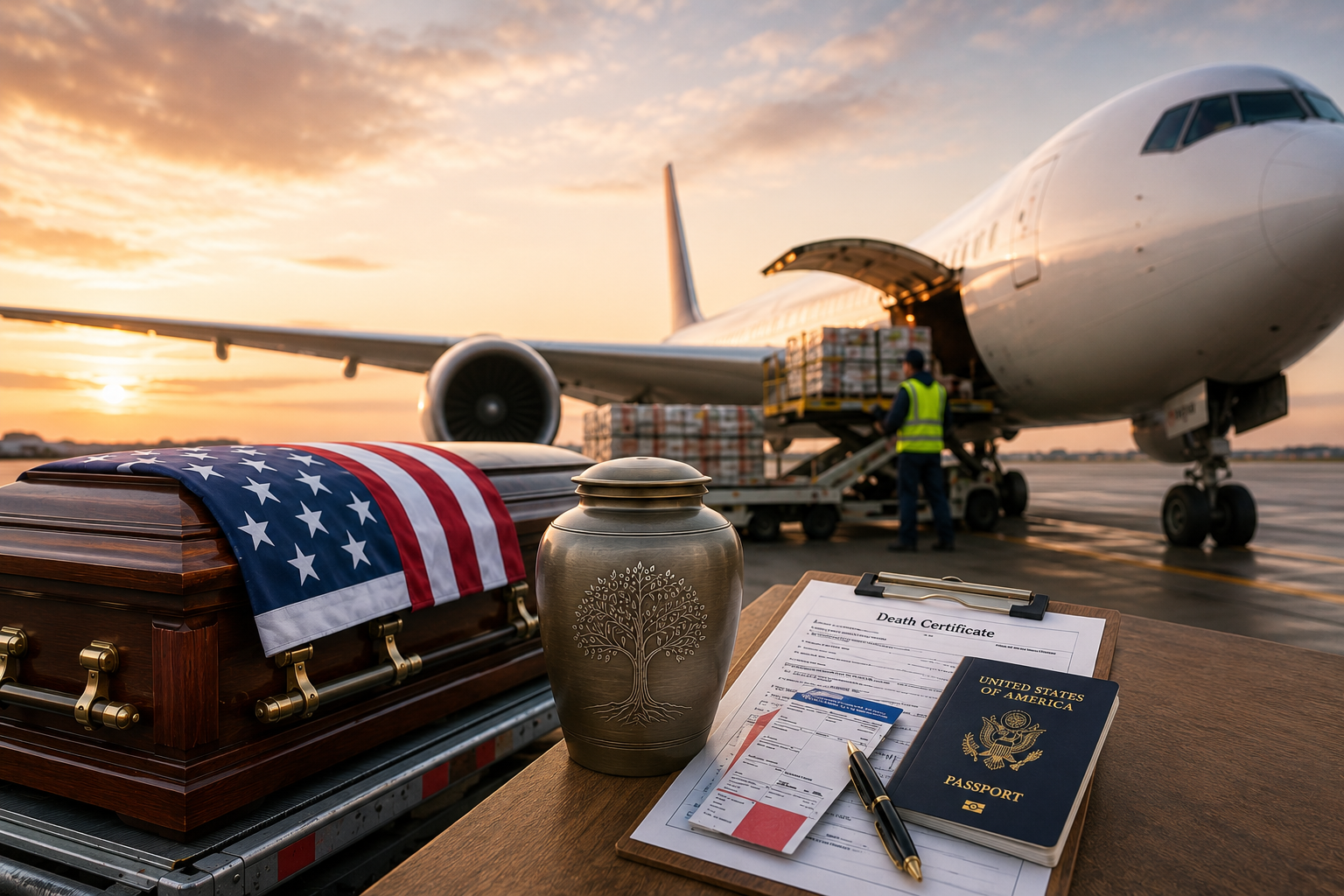
International repatriation and funeral shipping cost concept
May 10, 2026
Discover the total international funeral shipping cost, including airfare, consulate fees, and repatriation services. Learn what's included in the price.