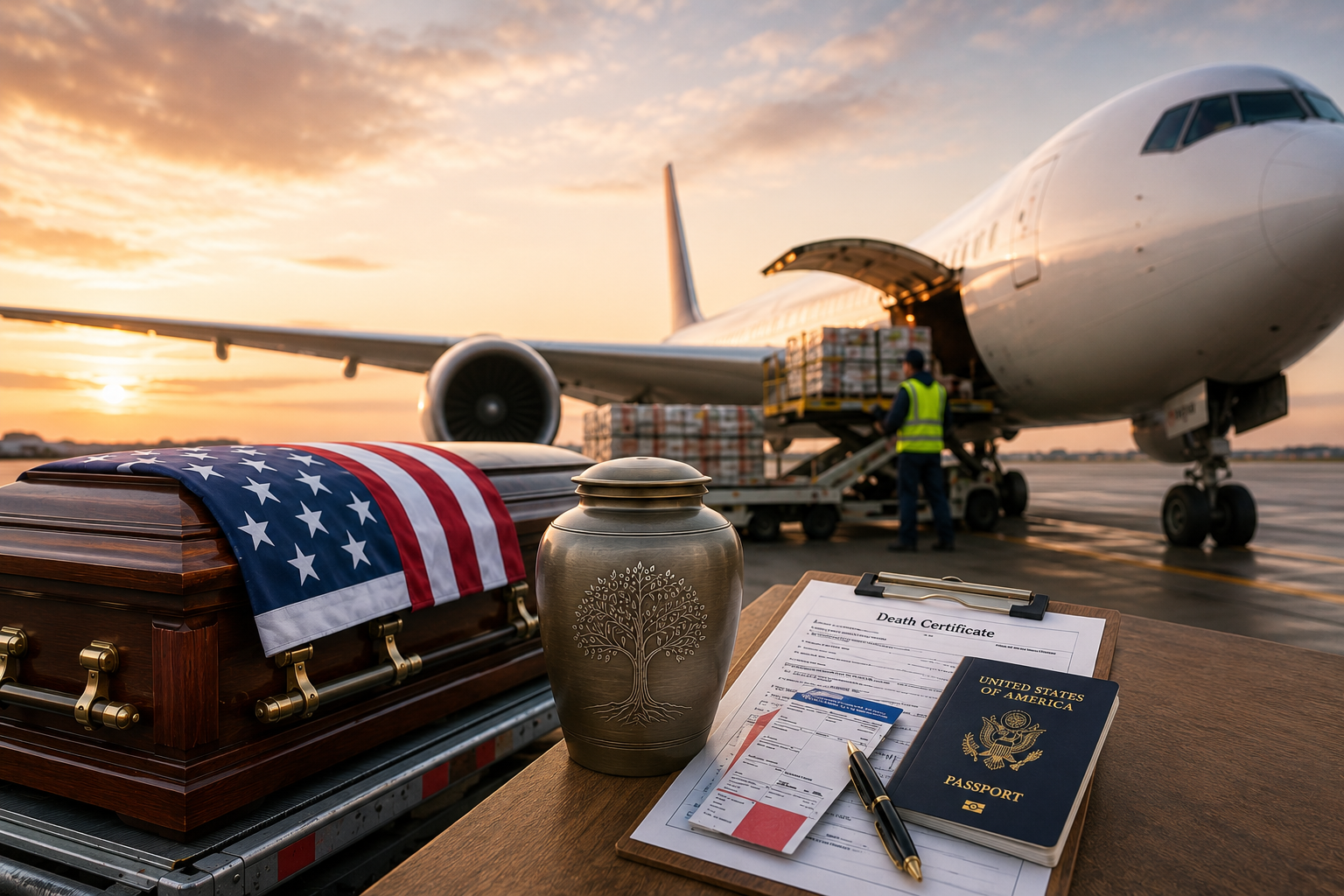




Funeral Shipping: Complete Guide to Repatriation in 2026
Funeral shipping is the specialized professional transport of a deceased person's remains from one location to another, typically across state lines or international borders. This process, often called repatriation, involves complex logistics, including specialized mortuary preparation, legal documentation, airline coordination, and adherence to strict health and safety regulations to ensure a respectful return home.
What is the process for funeral shipping?
The process of funeral shipping begins the moment a death occurs away from the individual's desired final resting place. Because the transport of human remains is highly regulated, families cannot manage this independently; it requires the intervention of a licensed funeral director or a specialized mortuary shipping service.
The initial phase involves the "sending" funeral home taking the deceased into their care. They perform the necessary preparation—which often includes embalming as required by airline regulations—and secure the specific transit permits. Coordination then shifts to logistics, where the provider works with specialized cargo departments of major airlines to book a flight.
Once the flight is scheduled, the deceased is transported in a specialized shipping container designed to protect the casket and comply with air freight standards. Upon arrival at the destination airport, a "receiving" funeral home collects the remains and transports them to the local funeral facility for the final service or burial. Throughout this journey, every step is tracked to ensure the highest level of dignity and security.
Understanding Domestic Funeral Shipping Requirements
When a loved one passes away in a different state, domestic funeral shipping is the standard solution. While less complex than international transport, it still requires specific adherence to state-to-state laws and airline policies. Most major domestic airlines have dedicated programs for the transportation of human remains, often referred to as "Known Shipper" programs.
To facilitate a smooth domestic transfer, several factors must be addressed:
- The Known Shipper Status: Only funeral homes with established "Known Shipper" status with the TSA and airlines can book these flights.
- Embalming Requirements: Most airlines and certain states require embalming for remains traveling by air, though refrigerated shipping is sometimes an option depending on the route.
- The Air Tray or Combo Unit: Remains must be placed in a specific outer shipping container. If the body is in a casket, an "air tray" is used. If there is no casket, a "combo unit" is utilized.
- Transit Permits: A burial-transit permit must be issued by the local registrar or health department where the death occurred.
- Logistical Timing: Flight availability can vary, and specialized mortuary shipping providers work to find the most direct routes to minimize layovers.
How does international repatriation differ from domestic shipping?
International repatriation is significantly more involved than domestic transport due to the layering of international law, consulate requirements, and customs regulations. While domestic shipping usually only involves a transit permit and airline booking, international shipping requires navigating the bureaucracy of two different nations.
Each country has unique requirements for admitting human remains. Some nations require specific types of caskets (such as zinc-lined containers), while others may demand multiple layers of documentation translated into the local language. Furthermore, the consulate and logistics services play a pivotal role, as many countries require a consulate official to seal the casket or issue a formal letter of authorization before the remains can leave the United States.
Key Documents for Mortuary Shipping Compliance
Documentation is the most time-consuming aspect of funeral shipping. A single missing stamp or signature can lead to delays at customs or a refusal by an airline to board the remains. When preparing for mortuary shipping , the following documents are typically essential:
- Certified Death Certificate: Multiple copies are often needed for different agencies.
- Burial-Transit Permit: The legal authorization to move the body.
- Non-Contagious Disease Letter: A document from a medical examiner or health department confirming the cause of death is not a public health threat.
- Embalming Affidavit: A notarized statement from the embalmer detailing the process used.
- Consular Birth/Death Reports: Required for certain international destinations to verify citizenship.
Navigating these requirements is a core part of our funeral pre-planning services , where we help families understand the necessary steps before an emergency arises.
How much does funeral shipping cost?
The cost of funeral shipping varies widely based on the distance, the weight of the shipment, and the specific requirements of the destination country. Families should expect two primary categories of expenses: professional service fees and third-party cash advances.
- Professional Fees: This includes the funeral home's charge for coordination, embalming, document preparation, and local transportation to the airport.
- Airfare: Airlines charge based on the weight of the remains and the container, as well as the destination. International rates are significantly higher than domestic ones.
- Shipping Containers: Specialized air trays, combo units, or zinc-lined caskets add to the material cost.
- Consulate Fees: Many international consulates charge for the processing of repatriation paperwork.
- Receiving Funeral Home Fees: You must also account for the costs charged by the funeral home at the destination for collection and final services.
The Average Cost to Ship a Casket
The cost to ship a casket can vary greatly depending on the destination and the type of services needed.
Based on real-world experience, these are common cost ranges families may see:
- Shipping a casket from New York to Florida typically ranges from $3,000 to $7,000 or more.
- Shipping a casket from New York to Mexico typically ranges from $4,000 to $12,000.
- Shipping a casket from New York to Africa typically ranges from $8,000 to $20,000.
- Shipping a casket from New York to China typically ranges from $10,000 to $25,000.
These ranges are general examples.
The final cost can change depending on distance, airline cargo rates, funeral home fees, required documentation, ground transportation, and the final destination.
For international shipments, the specific country matters a lot. Some destinations have more requirements than others. Some require consulate paperwork, translations, apostilles, specific permits, or additional coordination with the receiving funeral home overseas.
Transportation Methods for Deceased Remains
While air travel is the most common method for long-distance funeral shipping, it is not the only option. The method chosen depends on the distance, budget, and family preference.
1. Ground Transportation: For distances within a few hundred miles, specialized ground transport in a funeral coach or transport van is often more cost-effective and simpler than air travel. It avoids the need for airport logistics and specialized air containers.
2. Commercial Air Freight: This is the standard for both domestic funeral shipping and international repatriation. Remains are treated as priority cargo on passenger or cargo planes. It is fast and efficient but requires strict compliance with TSA and airline regulations.
3. Sea Freight: Though extremely rare due to the time involved, sea freight is technically an option for shipping human remains. However, it is almost never recommended due to the decomposition risks and the prolonged waiting period for the family.
4. Cremated Remains Transport: Shipping cremated remains is much simpler. In the United States, the only legal way to ship cremated remains is via the United States Postal Service (USPS) using their Priority Mail Express service. This allows for the respectful return of a loved one's ashes at a fraction of the cost of shipping a full body. You can browse our urns and memorables catalog for suitable containers for this process.
Why choose a specialized funeral shipping provider?
Choosing a general funeral home for shipping can sometimes lead to delays if they are not familiar with the nuances of international law or airline logistics. A specialized provider, particularly one based near major hubs like New Jersey or New York, brings a level of expertise that ensures errors are avoided.
Specialized providers offer:
- Established Relationships: They have direct lines to consulate offices and airline cargo managers.
- Speed of Execution: They know exactly which documents to prioritize to meet tight flight schedules.
- Zinc-Lining Expertise: They are equipped to handle the specific hermetic sealing required for many international shipments.
- Translation Services: Many specialized firms provide or coordinate the translation of death certificates and permits as required by the destination nation.
Families often find peace of mind knowing that their loved one is in the hands of experts who handle international funeral shipping every day, rather than a local home that may only do it once a year. This expertise is also vital when choosing caskets and urns that meet international shipping standards.
Summary and Key Takeaways for Families
Arranging the transport of a loved one is a daunting task during a time of grief, but understanding the basics of funeral shipping can alleviate much of the stress. Whether you are dealing with a domestic transfer or a complex international repatriation, the key is early communication and professional guidance. By selecting a specialized shipping provider, you ensure that legal, logistical, and cultural requirements are met with dignity.
Core Takeaways:
- Act Quickly: Contact a specialized provider immediately to begin the documentation process.
- Understand the Costs: Factor in airfare, professional fees, and destination costs.
- Legal Compliance is Vital: One missing document can stall the entire repatriation process.
- Choose the Right Container: Ensure your casket or shipping container meets airline and destination country standards.
- Rely on Experts: Use a funeral director with "Known Shipper" status to handle all airline and consulate coordination.
For more information on how we can assist your family during this difficult time, please visit our services page or contact us directly for immediate assistance.